
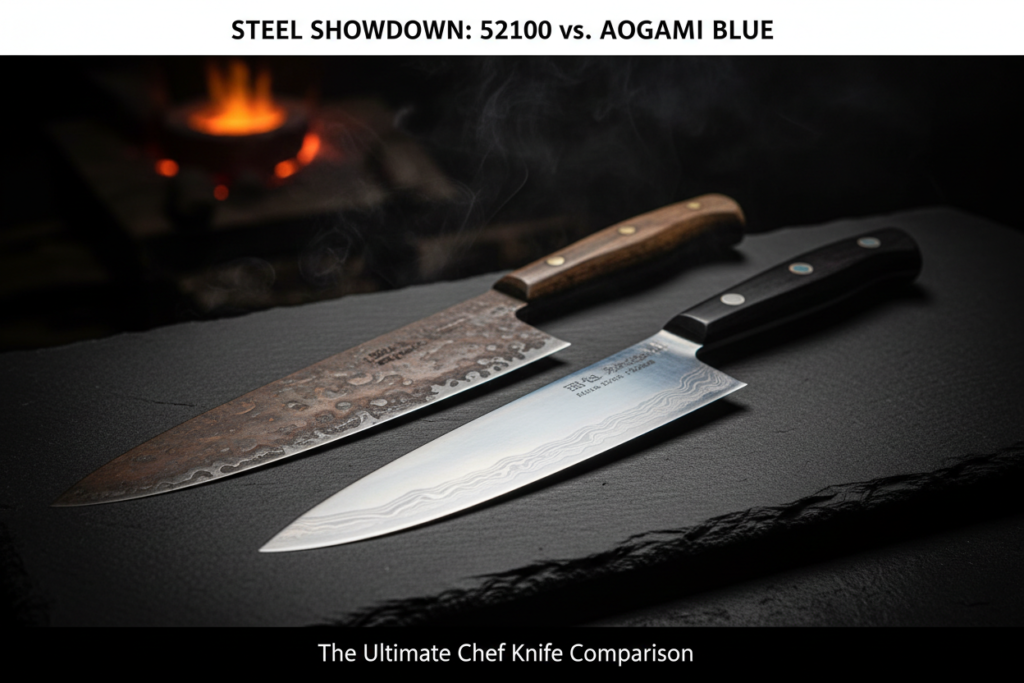
Why Steel Type Matters for Your Chef Knife
When shopping for a handmade carbon steel chef knife, you’ll quickly encounter two names: 52100 steel and Aogami #2 (Blue Steel). Both are premium carbon steels used by top knife makers worldwide – but they have distinct differences that affect performance, maintenance, and which one is right for you.
At Iron Hammer, we use both steels in our handmade knife collection. This guide will help you understand exactly what makes each steel special and which one suits your cooking style and maintenance preferences.
What is 52100 Carbon Steel?
52100 steel is a high-carbon, chromium-bearing steel originally developed for ball bearings – which tells you everything about its toughness and wear resistance. It’s become one of the most popular steels among custom knife makers worldwide for good reason.
52100 Steel Properties:
- Carbon Content: ~1.0% carbon
- Chromium: ~1.5% (not enough to be stainless, but adds toughness)
- HRC Hardness: 60-62 (when properly heat-treated)
- Edge Retention: Excellent – holds a sharp edge through heavy use
- Toughness: Outstanding – resists chipping and breaking
- Rust Resistance: Moderate – requires care but not overly demanding
- Sharpening: Relatively easy to sharpen
Who Should Choose 52100?
52100 is the ideal steel for cooks who want a high-performance carbon steel knife that’s forgiving and durable. It’s the steel we use in our most popular knives – the Iron Hammer Gyuto 210mm, Serbian Chef Knife, and Legend Gyuto – because it delivers exceptional performance with reasonable maintenance requirements.
What is Aogami #2 (Blue Steel)?
Aogami #2, also known as Blue Steel #2 or Aogami Super, is a premium Japanese tool steel produced by Hitachi Metals. The “blue” in the name comes from the blue paper used to wrap the steel during production – not the color of the steel itself.
Aogami #2 Steel Properties:
- Carbon Content: ~1.0-1.1% carbon
- Tungsten: ~1.5% (key differentiator – improves edge retention)
- Chromium: ~0.2-0.5%
- HRC Hardness: 62-65 (harder than 52100)
- Edge Retention: Exceptional – among the best of any carbon steel
- Toughness: Good, but slightly more brittle than 52100
- Rust Resistance: Low – requires more diligent care
- Sharpening: Takes a finer edge but requires more skill
Who Should Choose Aogami Blue Steel?
Aogami #2 is the choice for cooks who want maximum sharpness and edge retention and are willing to invest more time in knife care. We use it in our Iron Hammer Nakiri Sanmai 180mm – a knife designed for precision vegetable work where ultimate sharpness matters most.
52100 vs Aogami Blue Steel: Complete Comparison
| Property | 52100 Steel | Aogami #2 Blue Steel |
|---|---|---|
| HRC Hardness | 60-62 | 62-65 |
| Edge Retention | Excellent | Exceptional |
| Toughness | Outstanding | Good |
| Rust Resistance | Moderate | Low |
| Sharpening Ease | Easy | Moderate |
| Best For | All-purpose, heavy use | Precision cutting, vegetables |
| Maintenance Level | Medium | High |
| Price | More accessible | Premium |
Understanding Carbon Steel Patina
Both 52100 and Aogami Blue Steel will develop a patina over time – a dark, mottled layer that forms on the blade surface through use. Many cooks are alarmed when they first see this, but patina is actually your knife’s best friend.
Why Patina is Good:
- Creates a protective layer that slows further oxidation
- Reduces reactivity with acidic foods (onions, citrus, tomatoes)
- Gives your knife a unique, personalized appearance
- Indicates the steel is genuine high-carbon steel
How to Develop Patina Naturally:
Simply use your knife regularly. Cutting onions, citrus fruits, and proteins will naturally develop a beautiful patina over weeks of use. You can also force a patina using mustard or a diluted vinegar solution if you want to speed up the process.
Carbon Steel Knife Care: 52100 vs Aogami
Both steels require similar care, but Aogami Blue Steel demands slightly more attention due to its lower rust resistance.
Daily Care Routine (Both Steels):
- Rinse with warm water immediately after use
- Hand wash with mild soap – never dishwasher
- Dry immediately and thoroughly with a soft cloth
- Apply a thin layer of food-safe mineral oil or camellia oil
- Store on a magnetic knife strip or in a knife roll
Additional Care for Aogami Blue Steel:
- Be extra vigilant about drying – even brief moisture exposure can cause rust
- Apply oil more frequently, especially in humid environments
- Wipe the blade between cutting acidic foods
Which Steel Should You Choose?
Choose 52100 if:
- You want a high-performance knife with reasonable maintenance
- You use your knife heavily for all types of cutting tasks
- You’re new to carbon steel knives
- You want maximum toughness and chip resistance
- Iron Hammer 52100 knives: Gyuto 210mm, Legend Gyuto, Serbian Chef Knife, Kiritsuke Sanmai
Choose Aogami Blue Steel if:
- You want the sharpest possible edge
- You primarily cut vegetables and fish
- You’re experienced with carbon steel knife care
- You want exceptional edge retention between sharpenings
- Iron Hammer Aogami knife: Nakiri Sanmai 180mm
FAQ: 52100 vs Aogami Blue Steel
Is 52100 or Aogami better for beginners?
52100 is better for beginners. It’s more forgiving, easier to sharpen, and more resistant to rust – making it ideal for cooks who are new to carbon steel knife care.
Does carbon steel rust easily?
Carbon steel can rust if not properly cared for, but it’s not as fragile as many people think. With a simple daily routine (wash, dry, oil), your carbon steel knife will last a lifetime without rust problems.
How often should I sharpen a carbon steel knife?
Carbon steel knives hold their edge well, but regular honing (weekly) and sharpening (monthly for home cooks, more frequently for professionals) will keep them performing at their best.
What’s the difference between 52100 and stainless steel?
52100 carbon steel gets sharper, holds its edge longer, and is easier to sharpen than most stainless steels. The trade-off is that it requires more care to prevent rust. For serious cooks, carbon steel is almost always the better choice.
Shop Iron Hammer Carbon Steel Knives
Ready to experience the difference that premium carbon steel makes? Iron Hammer offers handmade knives in both 52100 and Aogami Blue Steel, hand-forged by Vietnamese artisan blacksmiths using traditional techniques.
Browse the Iron Hammer knife collection and find your perfect carbon steel chef knife today.