
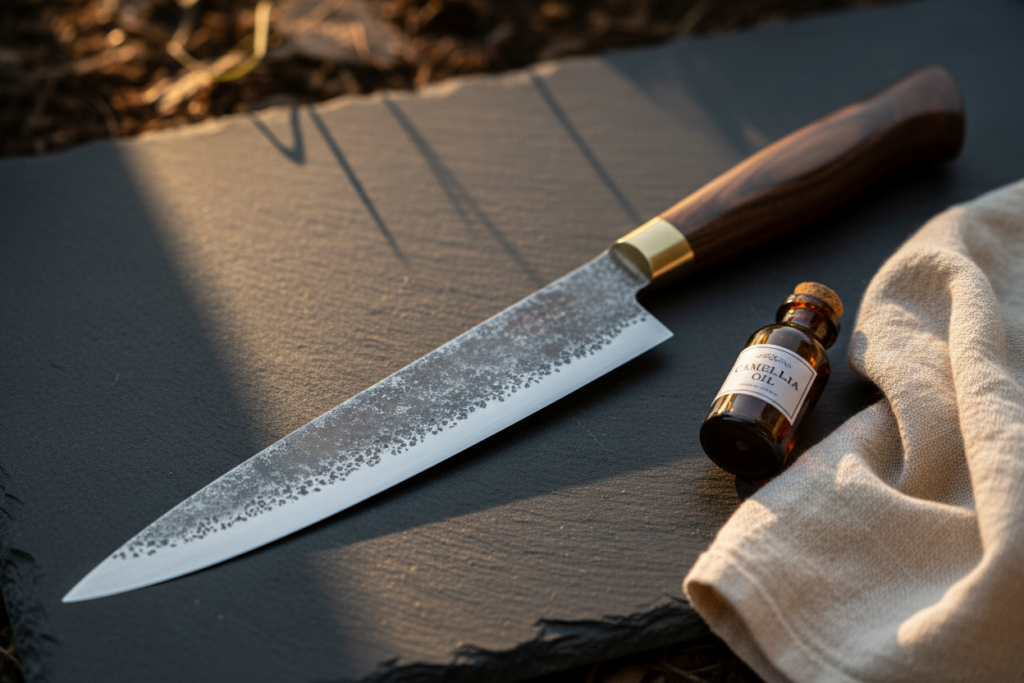
Why Carbon Steel Needs Special Care
You’ve invested in a handmade carbon steel chef knife – now how do you keep it performing at its best for years to come? Carbon steel knives are beloved by professional chefs and serious home cooks for their exceptional sharpness and edge retention. But unlike stainless steel, they require a bit more attention to prevent rust and maintain their performance.
The good news: caring for a carbon steel knife is simple once you know the routine. This guide covers everything you need to know – from daily cleaning to rust removal, patina development, sharpening, and proper storage.
After Every Use: The Essential Daily Routine
The most important rule for carbon steel knife care: never leave your knife wet. Moisture is the enemy of carbon steel. Follow this simple routine after every use:
Step-by-Step Daily Care:
- Rinse immediately – Rinse the blade with warm water right after use. Don’t let food acids (onions, citrus, tomatoes) sit on the blade.
- Hand wash gently – Use mild dish soap and a soft sponge. Avoid abrasive scrubbers that can scratch the blade.
- Dry immediately and thoroughly – This is the most critical step. Use a soft cloth or paper towel to dry the blade completely – including the spine, heel, and handle junction.
- Apply a thin layer of oil – After drying, apply a very thin layer of food-safe oil (mineral oil, camellia oil, or food-grade machine oil) to the blade. This creates a protective barrier against moisture.
- Store properly – Place on a magnetic knife strip or in a knife roll. Never store in a wet environment.
What to Avoid:
- ❌ Never put in the dishwasher – The heat, moisture, and detergents will destroy your knife
- ❌ Never soak in water – Even brief soaking can cause rust
- ❌ Never leave on a wet cutting board – Moisture wicks up into the handle
- ❌ Never store in a drawer without protection – Blade contact with other utensils damages the edge
Understanding Patina: Your Knife’s Best Friend
If you’re new to carbon steel knives, you might be alarmed when your blade starts developing dark spots or a mottled gray-brown appearance. Don’t panic – this is patina, and it’s completely normal and actually beneficial.
What is Patina?
Patina is a thin layer of iron oxide that forms on the surface of carbon steel through use and exposure to food acids. Unlike rust (which is destructive), patina is a stable, protective layer that:
- Slows further oxidation and rust formation
- Reduces the blade’s reactivity with acidic foods
- Gives your knife a unique, personalized appearance
- Indicates genuine high-carbon steel
How to Develop Natural Patina:
Simply use your knife regularly. Cutting onions, citrus fruits, apples, and proteins will naturally develop a beautiful patina over weeks of use. Each knife develops its own unique pattern based on what you cook.
How to Force a Patina (Optional):
If you want to speed up patina development and protect a new knife:
- Mustard method: Apply a thin layer of yellow mustard to the blade, leave for 30-60 minutes, then rinse and dry. The acetic acid in mustard creates a quick, even patina.
- Vinegar method: Wipe the blade with diluted white vinegar (1:1 with water), leave for 5-10 minutes, then rinse and dry immediately.
- Coffee method: Submerge the blade in strong black coffee for 30 minutes for a darker, more even patina.
How to Remove Rust from Your Carbon Steel Knife
Even with proper care, rust can sometimes appear – especially in humid environments. Don’t panic. Rust on a carbon steel knife is almost always fixable.
Light Surface Rust (Orange Spots):
- Make a paste with baking soda and water
- Apply to the rusted area with a soft cloth
- Rub gently in the direction of the blade’s grain
- Rinse thoroughly and dry immediately
- Apply oil to prevent recurrence
Moderate Rust:
- Use Bar Keepers Friend (oxalic acid cleaner) with a soft cloth
- Rub gently in the direction of the grain
- Rinse thoroughly and dry immediately
- Apply oil generously
Heavy Rust:
- Use 400-600 grit wet/dry sandpaper
- Sand in the direction of the blade’s grain only
- Progress to finer grits (800, 1000) to restore the finish
- Rinse, dry, and apply oil
- Consider re-sharpening after heavy rust removal
Prevention tip: After removing rust, develop a patina immediately using the mustard or vinegar method. This will protect the blade from future rust.
How to Sharpen Your Carbon Steel Chef Knife
One of the great advantages of carbon steel knives is how easily they sharpen. With the right technique, you can restore a razor-sharp edge in minutes.
Recommended Sharpening Angles:
- Gyuto: 15-17° per side
- Santoku: 15° per side
- Nakiri: 10-15° per side
- Kiritsuke: 15° per side
- Petty: 15° per side
Recommended Whetstone Progression:
- 220-400 grit: For repairing chips or very dull edges (use rarely)
- 1000 grit: Main sharpening stone – use when the knife feels dull
- 3000 grit: Refining the edge after 1000 grit
- 6000+ grit: Polishing for a razor-sharp, mirror finish
Honing vs Sharpening – What’s the Difference?
- Honing (with a honing rod or leather strop): Realigns the edge without removing metal. Do this weekly or before each use.
- Sharpening (with a whetstone): Removes metal to create a new edge. Do this monthly for home cooks, more frequently for professionals.
How Often to Sharpen:
- Home cook: Full sharpening every 1-3 months, honing weekly
- Professional chef: Full sharpening every 2-4 weeks, honing daily
- Test for sharpness: The paper test (slice through printer paper cleanly) or the tomato test (slice a ripe tomato without pressure)
Proper Storage for Carbon Steel Knives
Best Storage Options:
- Magnetic knife strip (recommended): Keeps knives accessible, allows air circulation, prevents edge contact with other utensils
- Knife roll: Perfect for travel or if you want to protect the edge
- Knife block: Acceptable, but make sure the knife is completely dry before storing
Storage to Avoid:
- ❌ Loose in a drawer – damages the edge and is dangerous
- ❌ In a wet environment – causes rust
- ❌ In a sealed container without airflow – traps moisture
Handle Care: Walnut & Rosewood
Iron Hammer knives feature beautiful walnut and rosewood handles that also need occasional care:
- Oil regularly: Apply food-safe mineral oil or beeswax to the handle every 1-3 months to prevent drying and cracking
- Avoid prolonged water exposure: Don’t soak the handle or leave it in standing water
- Dry thoroughly: After washing, dry the handle as well as the blade
- Condition seasonally: In dry climates or winter, condition the handle more frequently
Seasonal Maintenance Checklist
Daily:
- Wash, dry, and oil after every use
- Hone before use if needed
Weekly:
- Hone the edge with a leather strop or honing rod
- Check for any rust spots and address immediately
Monthly:
- Full sharpening on a whetstone
- Oil the wooden handle
- Inspect the handle for any looseness or cracking
Yearly:
- Deep clean and re-patina if needed
- Professional sharpening if you’re not confident in your own sharpening
- Inspect the handle ferrule and fittings
FAQ: Carbon Steel Knife Care
Can I put my carbon steel knife in the dishwasher?
Never. The dishwasher’s heat, moisture, and harsh detergents will cause immediate rust and can warp or crack the wooden handle. Always hand wash and dry immediately.
My knife has orange spots – is it ruined?
No. Surface rust is almost always fixable with baking soda paste or Bar Keepers Friend. Follow the rust removal steps above, then develop a patina to protect the blade going forward.
How do I know when my knife needs sharpening?
Try the paper test: hold a sheet of printer paper vertically and slice through it. A sharp knife will cut cleanly; a dull knife will tear or deflect. You can also try slicing a ripe tomato – a sharp knife should glide through without pressure.
What oil should I use on my carbon steel knife?
Food-safe mineral oil is the most accessible and affordable option. Camellia oil (tsubaki oil) is the traditional Japanese choice and works beautifully. Avoid olive oil or other cooking oils – they can go rancid and create unpleasant smells.
Shop Iron Hammer Carbon Steel Knives
Ready to experience the joy of a truly sharp, handmade carbon steel chef knife? Iron Hammer offers a range of hand-forged knives in 52100 carbon steel and Aogami Blue Steel, crafted by Vietnamese artisan blacksmiths.
Browse the Iron Hammer knife collection – and with proper care, your knife will last a lifetime.